Haunted Wood
Anne of the IslandHaunted Wood is a familiar woodland near Green Gables whose significance rests as much on memory as on place. Its ferns, paths, and clearings anchor Anne Shirley and Diana Barry’s childhood imaginings, while later journeys through the wood bring those memories into contact with Anne’s changing feelings and the prospect of leaving Avonlea. It is not presented as a site of actual supernatural events: its haunting is made of remembered games, old fears, and the awareness that childhood cannot simply be resumed.
Setting and Seasonal Character
The wood appears within a landscape that changes with the seasons. During a summer apple-picking visit, the air around Green Gables still carries the scent of ferns in Haunted Wood, even as the wider scene begins to turn toward autumn. The season’s change gives the woodland a place in a threshold landscape: summer lingers, but the fields and surrounding country already signal that one phase is ending.
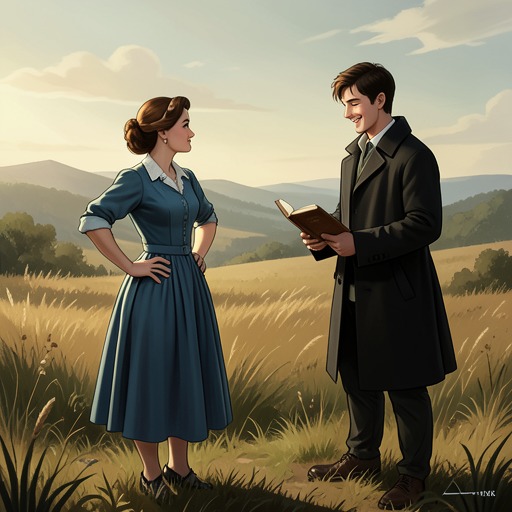
Later, Anne and Gilbert Blythe walk through the wood beneath an autumn sunset. Anne gathers frost-whitened ferns, and the wood’s old paths prompt her to recall the girls they once were. Nearby are the Dryad's Bubble, where Anne and Diana used to sit at twilight, and the marsh, whose head is reached through wooded ground and adjoining landscape. The setting is therefore more than an isolated stand of trees: its paths connect remembered meeting places and form part of the countryside through which the characters move.
The wood also has practical importance. In winter, heavy drifts make the old way through Haunted Wood between Green Gables and Orchard Slope impassable. The familiar route that once supported visits and companionship becomes difficult to use, increasing Anne’s isolation while Diana is ill at home. The weather does not change what the wood means in memory, but it changes what the place permits in daily life.
Childhood Games and Invented Hauntings
Anne’s recollection of Haunted Wood gives the place a history shared with Diana. She imagines that their younger selves still play there and meet ghosts beside the Dryad's Bubble. The memory is specific rather than a general claim that the wood is enchanted: the girls invented several frightening figures, including a murdered child’s ghost, and Anne recalls that this particular creation continued to trouble her when she passed along the path after nightfall.
That remembered fear complicates the wood’s name. The suggestion of haunting belongs to childhood play and its lasting emotional effects, not to a confirmed supernatural presence. Anne distinguishes between the ghost stories she could dismiss and the one invention she wished they had never made. The wood holds both the pleasure of imaginative play and the uncomfortable persistence of a fear born from it.
The adults’ response also belongs to this remembered episode. Anne recalls that Marilla Cuthbert and Mrs. Barry were angry about the affair. Their disapproval marks a boundary between the girls’ imaginative world and adult judgment, while Anne’s later laughter shows that she can revisit the incident with some distance. The memory remains vivid without being treated as an event that has literally transformed the woods.
Memory and Changing Relationships
Haunted Wood’s importance grows from the way it lets Anne recognize change through a familiar landscape. Walking there with Gilbert, she describes the wood as haunted by old memories and pictures the little girls she and Diana used to be. The recollection places friendship and childhood play inside the present journey: the same paths remain, but the people who travel them have grown older.
That awareness sits beside the new self-consciousness Anne feels about Gilbert. Their established school-day companionship has become unsettled by the possibility of romantic feeling, and Anne fears that the change may spoil their friendship. The walk through the wood does not resolve this tension; rather, its accumulated associations make the contrast legible. A place linked to an earlier, easier closeness accompanies a relationship that Anne no longer experiences as entirely unchanged.
The woodland also recurs around moments when Anne considers other people’s transitions. On the evening before Diana’s wedding, Anne looks through a gap in Haunted Wood toward the light in Diana’s room and finds the prospect of her friend’s marriage both strange and painful to contemplate. The view connects the wood to a nearby domestic life without making it the site of the wedding itself. Here, as in Anne’s memories of childhood, the place frames an awareness that friendship continues while its circumstances alter.
Routes, Separation, and Narrative Significance
The wood’s paths give these memories a material geography. Anne’s recollection locates childhood meetings at the Dryad's Bubble, while the route through the trees links Green Gables with Orchard Slope. In winter, snow closes that familiar passage just when Anne has fewer chances to see Diana. The same landscape can thus serve as a meeting ground in memory and an obstacle in the present, depending on season and circumstance.
Across these appearances, Haunted Wood gathers several kinds of change without becoming a purely symbolic backdrop. Seasonal signs establish the passage from summer toward autumn; the girls’ invented ghosts preserve the intensity of childhood imagination; and blocked winter travel makes separation concrete. Later, the wood’s proximity to Diana’s room places Anne’s apprehension about marriage within the ordinary geography of Avonlea. Its meaning comes from these distinct uses, not from one fixed supernatural explanation.
For Anne, returning to the wood is a way of encountering what has lasted and what cannot be recovered unchanged. The paths and remembered landmarks remain available to her, but their associations now include a growing awareness of altered relationships, departures, and adult life. Haunted Wood consequently holds the novel’s movement between childhood and maturity in a single familiar setting: the past is close enough to be revisited, yet it is no longer the present.